Espresso: Pressure Mechanics and Puck Dynamics
Harness 9 bars of positive displacement. Balance flow velocity, puck density, grind particle resistance, and extraction yield within the strict 25–30 second operating envelope.
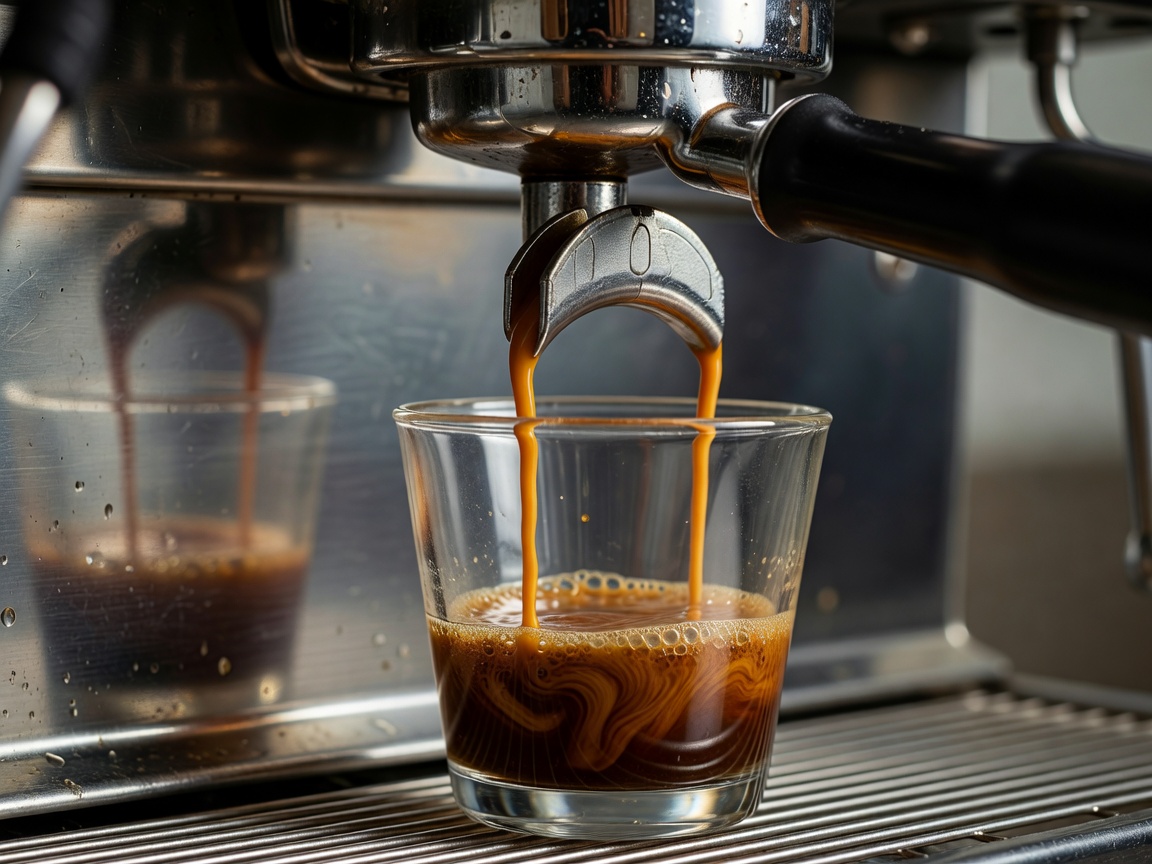
The 9-Bar Pressure Environment
Espresso is defined by mechanical pressure forcing hot water through a tightly compacted, finely ground coffee puck. Standard commercial and domestic rotary or vibratory pumps generate between 8 and 9 bars (approximately 116 to 130 psi) of hydraulic head pressure. Under this intense energy, extraction occurs at rapid speed: volatile aromatics, high-molecular lipids, and soluble organic solids dissolve within 20 to 35 seconds.
Because pressure compresses the bed dynamically, any structural defect in the coffee puck leads to catastrophic channelling. Water follows the path of least resistance. When a microscopic fracture or density void exists in the ground matrix, pressurized water rushes through that single conduit, leaving the remainder of the coffee puck largely under-extracted while severely over-extracting the walls of the fracture line. The result in the cup is sharp astringency alongside thin sourness.
Puck Preparation and Distribution
Uniform particle distribution is the foundation of high-yield espresso extraction. Grinding coffee produces electrostatic charges that cause grounds to clump together into dense aggregates. If these clumps are simply tamped down into the portafilter basket, density disparities remain intact across the horizontal plane of the basket.
Deploy the Weiss Distribution Technique (WDT): use fine needle probes (0.3mm to 0.4mm diameter) to stir the grounds mechanically before tamping. This declumps the dose and redistributes particle size evenly from basket base to surface. Tamp with consistent, planar force. The goal of tamping is solely to eliminate air voids between particles; once the bed reaches maximum mechanical compression, additional downward force has zero effect on flow resistance.
| Extraction Parameter | Standard Range | Mechanical Function |
|---|---|---|
| Dry Dose Mass | 18.0g ± 0.2g | Establishes available soluble mass and basket headroom |
| Liquid Beverage Yield | 36.0g – 40.0g | Target brew ratio (1:2 to 1:2.2) balancing strength and yield |
| Extraction Contact Time | 25 – 32 seconds | Contact duration at full operational pump pressure |
| Slurry Temperature | 92°C – 94°C | Sustains kinetic energy without scorching light-roasted beans |
Crema Formation and Lipid Emulsion
The hallmark visual feature of espresso—crema—is an emulsion of carbon dioxide gas micro-bubbles trapped inside liquid coffee oils and aqueous proteins. Freshly roasted coffee contains substantial internal carbon dioxide retained inside cellular structures. Under 9 bars of pressure, gas dissolves into water at supersaturated levels. When the liquid exits the basket apertures and drops back to atmospheric pressure (1 bar), the gas immediately precipitates out, creating dense foam.
Crema acts as an aromatic trap, holding delicate volatile compounds that disperse quickly in filter coffee. However, tasting pure crema reveals intense bitterness and ash tones. Stirring the espresso with a demitasse spoon before tasting homogenises the dense lipid top layer with the sweet, high-acid lower strata of the cup, ensuring balanced sensory evaluation.
Diagnosing Extraction Flaws
Observe the stream from a bottomless (naked) portafilter to diagnose your mechanical workflow. If you notice rapid blonding—where the stream turns pale and translucent within 10 seconds—the water has channelled or your grind setting is too coarse, preventing sustained resistance.
If the pump strains, vibrates excessively, and produces only intermittent dark droplets past 15 seconds, the grind is excessively fine, choking the stainless steel basket filter mesh. Make micro-adjustments on your stepless grinder collar: shift coarser in single-micron increments until your target 36-gram beverage weight lands squarely between 27 and 30 seconds with clean, unified cone convergence beneath the basket.